Native Fish Conservation & Monitoring at Grand Canyon
Native fish conservation and monitoring supports the protection of aquatic ecosystems at Grand Canyon through long-term research, restoration, and stewardship.

Native Fish Conservation at Grand Canyon
It wasn’t long ago that the humpback chub, a resilient fish uniquely adapted to Grand Canyon’s powerful whitewater, was listed as endangered. After decades of coordinated conservation work, the species was reclassified as threatened in 2021, marking a hopeful step forward for one of the canyon’s most iconic native fish.
But today, that progress is at risk.
Unprecedented low water levels in nearby Lake Powell have made it easier for non-native fish such as smallmouth bass to pass through Glen Canyon Dam and enter Grand Canyon’s river corridor. If these invasive species become established, they could undo years of recovery efforts and threaten native fish communities across the park.
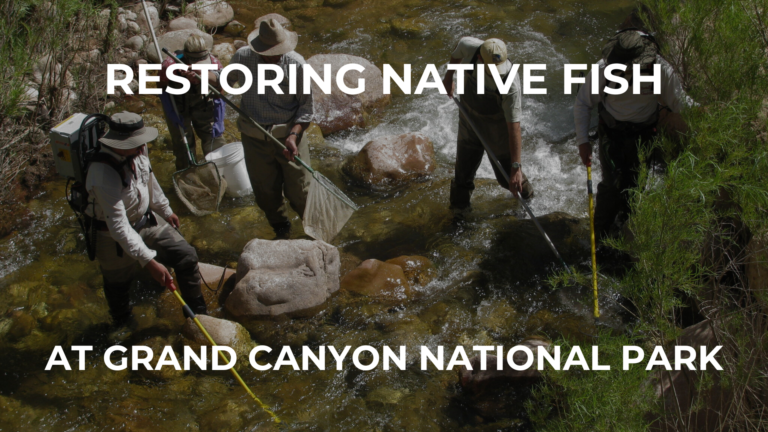
Native Fish Conservation and Monitoring is a long-term, science-based effort focused on protecting these species and the aquatic habitats they depend on. Through field research, population monitoring, and rapid-response preparedness, scientists and park managers are working to safeguard the Colorado River ecosystem for future generations.
As the official nonprofit partner of Grand Canyon National Park, Grand Canyon Conservancy provides critical funding that makes this work possible.
Why Native Fish Conservation Matters
Native fish species such as the humpback chub, razorback sucker, and Colorado pikeminnow are uniquely adapted to the Colorado River’s natural flow patterns, temperatures, and geology. These fish play a vital role in maintaining food webs, water quality, and the overall health of Grand Canyon’s aquatic ecosystem.
When invasive species gain a foothold, they compete with native fish for food and habitat and can dramatically alter river conditions. Protecting native fish is essential to preserving the ecological balance that supports wildlife, riparian habitats, and the natural processes that shape the canyon.
Your generous gift will:
- Fund the purchase of rapid-response supplies, including specialized boats and electrofishing equipment, to reduce immediate threats from invasive species.
- Support river missions, staffed by experts, for invasive species removal.
- Facilitate ongoing data collection and analysis to measure the effectiveness of conservation efforts.
Support this Project
Donate Now
What’s Been Completed
Thanks to Grand Canyon Conservancy support
Despite wildfire and a federal government shutdown that disrupted some fall 2025 fieldwork, GCC-funded conservation efforts made meaningful progress.
Recent accomplishments include:
Razorback Sucker Research (RM 209):
- Purchased specialized equipment for a fisheries survey of the isolated pool at River Mile 209, a potential habitat for razorback sucker restoration
- Coordinated with the Hualapai Tribe to secure research permits and plan collaborative fieldwork
Endangered Colorado Pikeminnow Pilot Project:
- Purchased and repaired monitoring equipment, including sonic tags and submersible receivers
- Surgically implanted tracking tags in adult female Colorado pikeminnow
- Secured safe holding facilities to care for the fish until release
Humpback Chub Monitoring:
- Continued preparation for environmental DNA (eDNA) sampling, a key tool for tracking humpback chub distribution and recovery
These efforts ensure that conservation teams are ready to act quickly and effectively to protect native fish.
What’s Planned for 2026
Native fish conservation and monitoring will continue to be a priority in the years ahead. With continued support from Grand Canyon Conservancy, several high-priority conservation efforts will move forward in 2026:
Razorback Sucker Research:
- The park’s fisheries team plans to conduct a fisheries survey of the isolated pool at River Mile 209 in April 2026 to assess habitat conditions and restoration potential, using the remaining funds from 2025
Colorado Pikeminnow Recovery:
- Continue collaboration with the U.S. Fish & Wildlife Service
- House endangered Colorado pikeminnow until release
- Release tagged fish into the Grand Canyon in fall 2026 to study survival and habitat use
Humpback Chub Monitoring:
- Conduct eDNA sampling in September 2026, the next optimal window for reliable detection
These initiatives will provide critical data, guide river management decisions, and help protect the future of Grand Canyon’s native fish.
How Grand Canyon Conservancy Supports Native Fish Conservation
Grand Canyon Conservancy provides philanthropic support that helps sustain:
- Field research and monitoring
- Scientific analysis and data collection
- Long-term conservation planning
- Collaboration among scientists, tribes, and park managers
Your support makes it possible to protect the Colorado River and the species that depend on it.

Ed Keable
Superintendent Grand Canyon National Park“Native species are essential for keeping Grand Canyon ecosystems balanced and healthy. Yet climate change, low water levels, and invasive species threaten native fish populations. Your help is vital for park conservation efforts.”
Fundraising Goal
$150,000
Project Partners
Grand Canyon National Park Native Fish Ecology and Conservation Program
Grand Canyon Conservancy
Frequently Asked Questions
Why is long-term monitoring important for native fish?
Long-term monitoring helps scientists understand population trends and ecosystem changes over time, allowing for informed and adaptive management.
What types of habitats are monitored?
Monitoring includes rivers, tributaries, and aquatic environments that support native fish species.
Who leads native fish conservation efforts?
Native fish conservation is led by Grand Canyon National Park in collaboration with scientists, researchers, and partner organizations, with support from Grand Canyon Conservancy.
How does this work benefit Grand Canyon overall?
Healthy aquatic ecosystems support biodiversity, ecological balance, and the long-term preservation of natural resources.
Contact us to receive more information about this project.
GCC Philanthropy Team
Related Projects