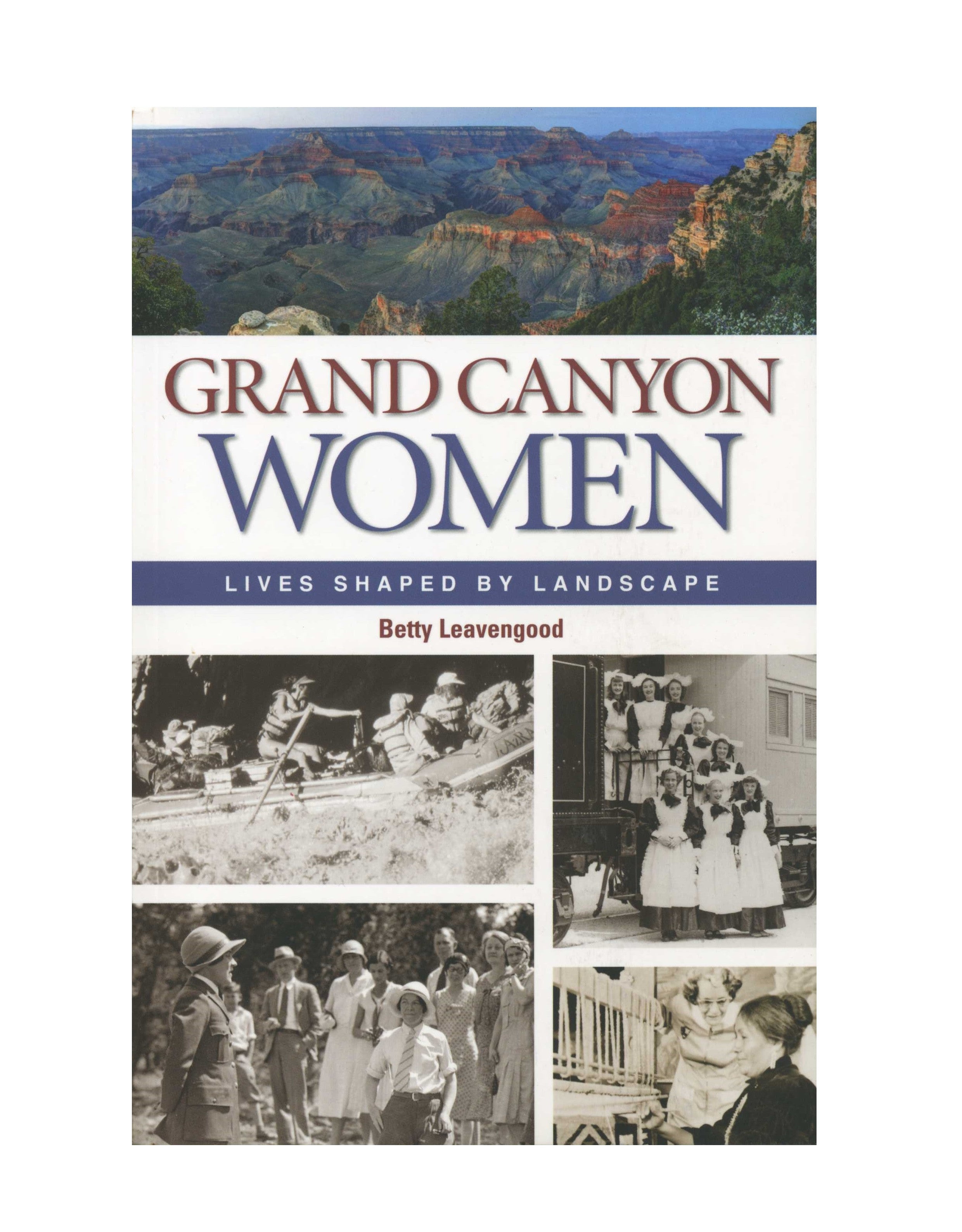
To receive book recommendations, educational updates, and stories about the people shaping the canyon today, subscribe to Grand Canyon Conservancy's email newsletter.
Famous Grand Canyon Women: Honoring Women’s History Month
Explore the stories of women who shaped Grand Canyon through science, culture, conservation, and exploration. From Indigenous leaders to pioneering researchers, their legacies continue to inspire and protect this remarkable landscape.
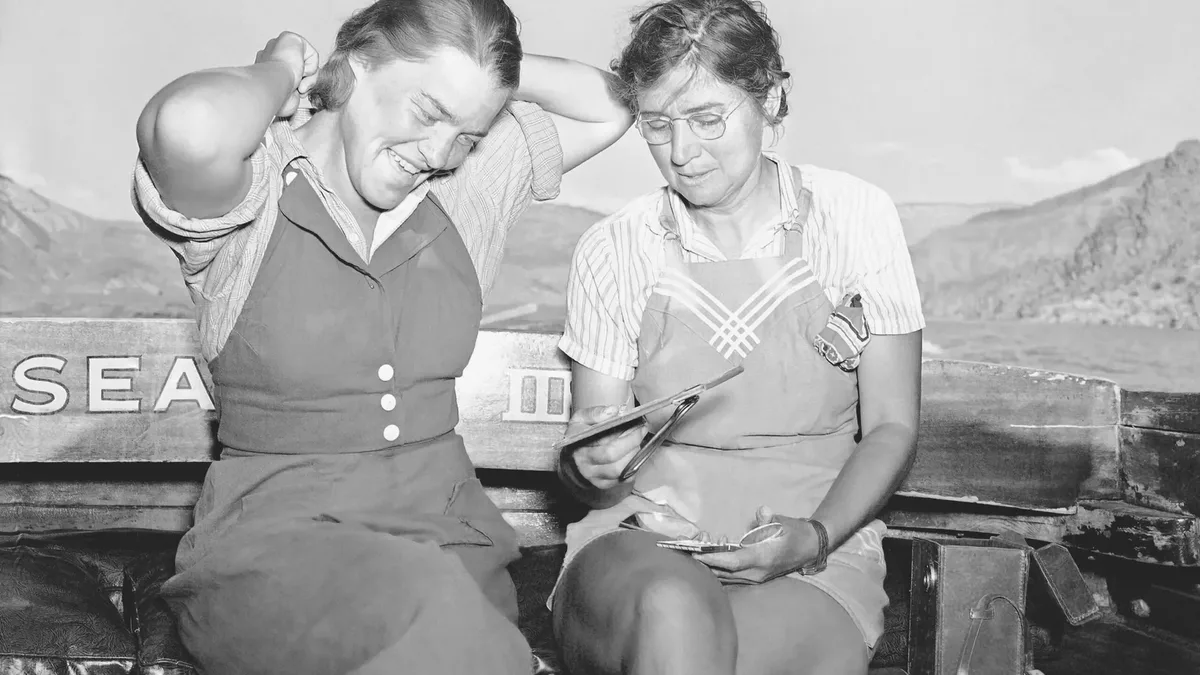
For generations, women have played a vital role in shaping the story of Grand Canyon. Their work has influenced scientific discovery, cultural preservation, education, and conservation across this extraordinary landscape.
Some arrived as researchers documenting the canyon’s ecosystems. Others came as artists, educators, advocates, and community leaders who helped people better understand and protect this place.
During Women’s History Month, Grand Canyon Conservancy reflects on the many women whose curiosity, courage, and dedication help deepen our understanding of Grand Canyon and strengthen efforts to preserve it for future generations.
Their stories continue to inspire new research, educational programs, and conversations about the many ways people connect to the canyon.
Elzada Clover & Lois Jotter: Scientific Trailblazers
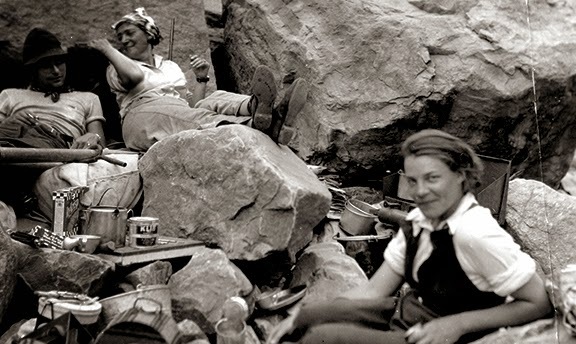
In 1938, botanist Elzada Clover and graduate student Lois Jotter embarked on a journey that would make history.
The two scientists joined a Colorado River expedition through Grand Canyon to study plant life along the river corridor. At the time, river travel through the canyon was still rare and demanding. Their mission was not recreation, it was research.
As they floated the river, Clover and Jotter carefully documented plant species growing in one of the most complex and varied ecosystems in the Southwest. Their collections and field notes helped scientists better understand desert botany and plant adaptation in extreme environments.
The expedition also marked a historic milestone: Clover and Jotter became the first known women to boat the Colorado River through Grand Canyon.
Their story is explored in the book Brave the Wild River, which recounts their scientific work and the challenges they faced during the expedition.
Indigenous Women and Cultural Stewardship
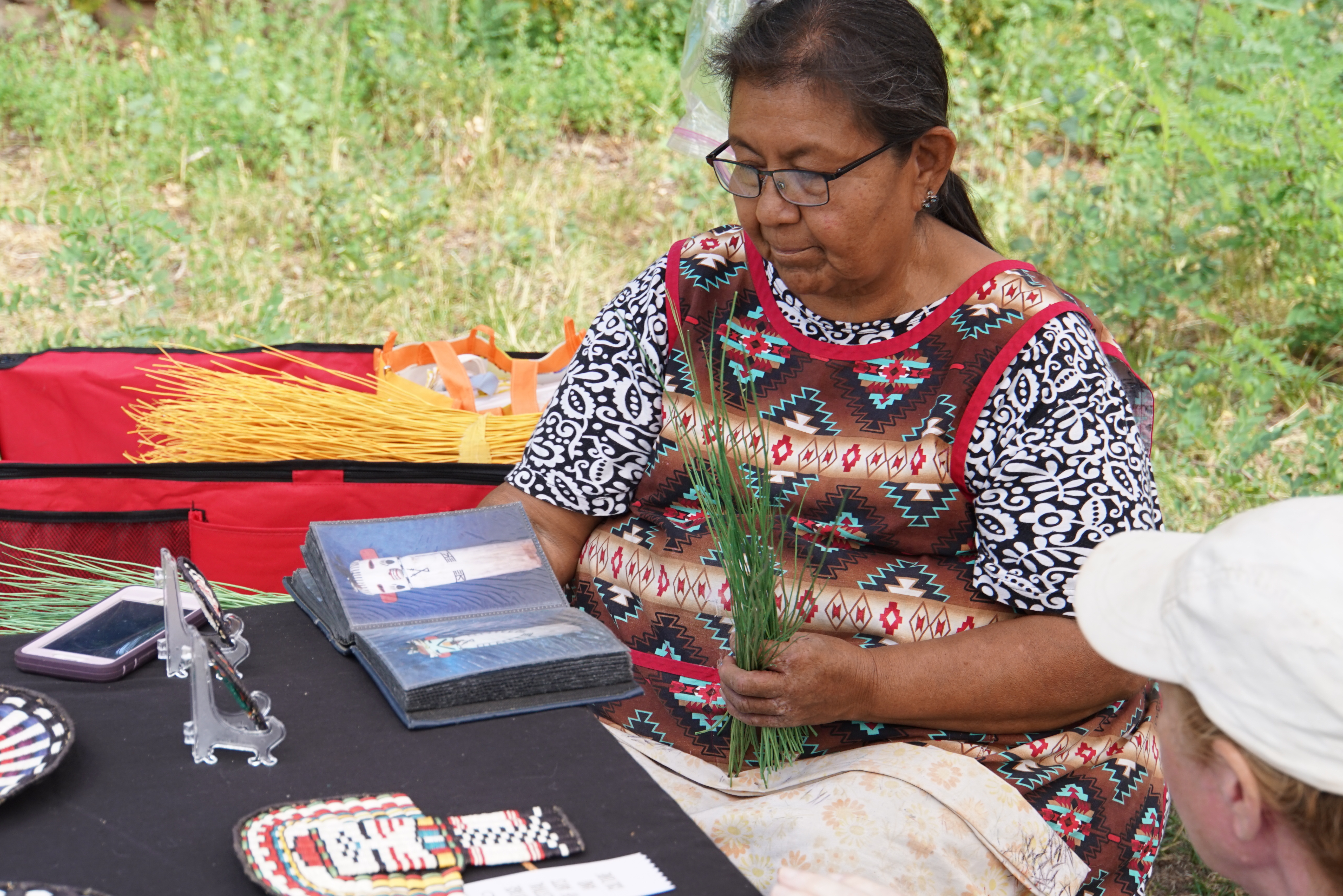
Long before scientific expeditions and tourism reached the canyon, Indigenous communities maintained deep cultural relationships with this landscape. Women within these communities have long played essential roles in preserving cultural traditions, knowledge, and connections to the land.
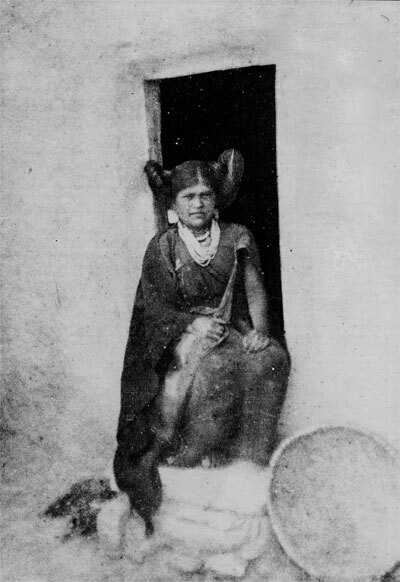
Nampeyo: A Legendary Hopi Artist
One of the most influential Indigenous artists connected to the Grand Canyon region was Nampeyo, a Hopi-Tewa potter born around 1860 at Hano Village on First Mesa in Arizona.
Nampeyo learned pottery from her mother, White Corn, but she also studied ancient pottery fragments from ancestral Hopi villages. These designs inspired her to revive traditional Hopi pottery styles that had been nearly forgotten.
Her work quickly gained recognition for its distinctive geometric designs and craftsmanship. Rather than simply labeling her pottery “Made in Hopi,” many pieces were marked “Made by Nampeyo,” reflecting her growing reputation.
In 1905, Nampeyo and her family spent several months living at Hopi House at the Grand Canyon, where she demonstrated pottery-making to visitors. Her work introduced many travelers to Hopi artistic traditions and helped elevate Indigenous art in the national consciousness.
Today, Nampeyo’s pottery is displayed in museums around the world, and her artistic legacy continues to inspire generations of Hopi artists.
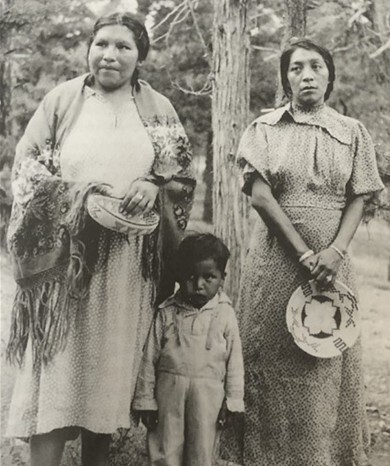
Ethel Jack: Advocate for Havasupai Homeland
For generations, Indigenous communities have fought to preserve their homelands and cultural traditions. Among them was Ethel Jack of the Havasupai Tribe, an artist, activist, and powerful advocate for her people.
Born in Havasu Canyon in 1908, Jack was a skilled basket weaver whose work was sold to the Smithsonian Institution. But her legacy extends far beyond her artistry.
Her grandfather, Billy Burro, farmed the plateau now known as Havasupai Gardens until he was forcibly removed by park rangers in 1928. Decades later, Jack and her husband, Clark Jack lived and worked in the same area while employed by the National Park Service — a place filled with both family history and generational trauma.
In 1955, the National Park Service expelled many Havasupai families from Supai Camp and demolished their homes. In response, the Havasupai Tribal Council asked Ethel Jack to advocate for the return of their ancestral lands.
Jack traveled repeatedly to Washington, D.C., speaking with lawmakers and working on legislation that would restore tribal lands. She spent long hours waiting in government offices and pushing for recognition of Havasupai rights.
Her perseverance helped lead to the 1975 Grand Canyon Enlargement Act, which returned 185,000 acres of ancestral land to the Havasupai Tribe.
As historian Stephen Hirst describes, Ethel Jack was a Havasupai elder, spokeswoman for traditional beliefs, and a key advocate for the return of Havasupai homeland.
Her story reflects resilience, cultural strength, and the enduring relationship between Indigenous communities and the Grand Canyon landscape.
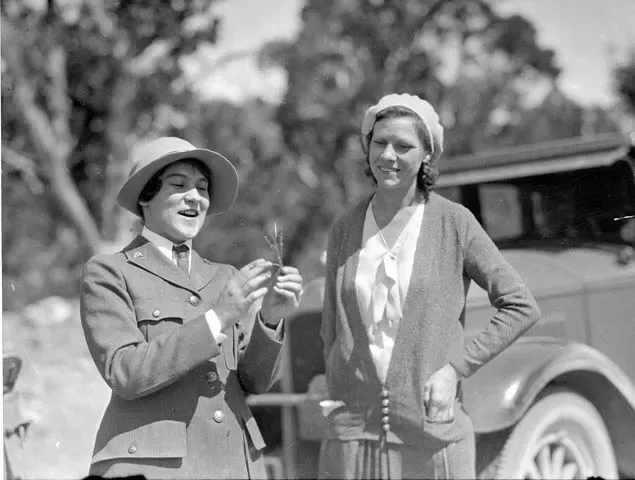
Settlers and Hospitality Pioneers
In the late 1800s and early 1900s, several women who arrived at Grand Canyon helped shape the region’s emerging tourism industry and community life.
Ada Bass was one of the earliest settlers on the South Rim. Alongside her partner, guide William Wallace Bass, she helped manage operations that supported early visitors exploring the canyon. Life at the rim required resilience and resourcefulness, and Ada Bass played a vital role in supporting early tourism in a remote and challenging environment.
Another influential figure was Elizabeth Kent Meyer, a Harvey Girl who worked along the railroad that brought travelers to the canyon. Harvey Girls helped shape the hospitality culture of the American Southwest, welcoming visitors and ensuring travelers experienced comfort and professionalism in remote destinations like Grand Canyon.
These women helped build the foundations of the visitor experience that millions of people enjoy today.
Architects, Rangers, and Canyon Naturalists
Women have also played important roles in shaping how visitors experience Grand Canyon.
One of the most famous figures is Mary Colter, the visionary architect behind some of the park’s most iconic structures. Her designs include Desert View Watchtower, Hopi House, and several other historic buildings.
Colter’s work blended Southwestern architectural styles with influences from Indigenous design traditions. Her structures were intentionally created to appear as though they had always belonged within the canyon landscape.
Another influential park professional was Polly Mead Patraw, one of the first female ranger-naturalists at Grand Canyon National Park. She guided visitors on hikes and helped interpret the canyon’s geology, wildlife, and ecosystems for the public.
Through education and storytelling, Patraw helped generations of visitors better understand the natural and scientific significance of the canyon.
Adventurers and Explorers
The rugged terrain of Grand Canyon has long attracted adventurers determined to test their endurance and curiosity.
Ruth Stephens Baker became known for a daring journey to the remote Shiva Temple, a striking sandstone formation deep within the canyon. Her accomplishment demonstrated the determination and physical endurance required to explore some of the canyon’s most isolated landscapes.
More recently, endurance hikers such as Denise Traver have continued pushing the limits of what is possible on canyon trails, completing challenging long-distance hikes and inspiring others to explore the canyon responsibly.
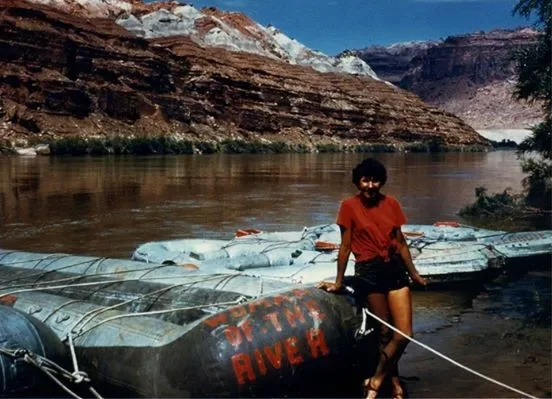
Women of the Colorado River
The Colorado River running through the canyon has also shaped the stories of many pioneering women.
One of the most mysterious figures in canyon history is Bessie Haley Hyde, who attempted a Colorado River expedition with her husband in 1928 but disappeared during the journey. Her story remains one of the canyon’s enduring legends.
Other women helped break barriers in river-running culture. These include:
- Doris Nevills, who continued guiding river trips after the death of her husband, early river pioneer Norman Nevills
- Georgie White Clark, widely known as the “First Lady of the Colorado River”
- Louise Teal, one of the early women to build a professional career guiding river trips
- Gale Burak, an adventurer and guide who helped expand opportunities for women in river-running
These women helped transform Colorado River rafting from a rugged expedition into a respected guiding profession.
Writers, Historians, and Advocates
Women have also shaped how people understand the canyon through writing, documentation, and advocacy.
Louise Hinchliffe documented many aspects of canyon life, helping preserve historical knowledge about the region and its communities.
Katie Lee, a singer, writer, and passionate environmental advocate, became widely known for opposing the damming of Glen Canyon. Through her music and writing, she raised awareness about the importance of protecting the Colorado River and the landscapes it sustains.
Why Women’s Stories Matter
Understanding the full history of Grand Canyon means recognizing the many voices that shaped it.
Women have contributed to scientific research, architecture, conservation, art, tourism, activism, and cultural preservation throughout the canyon’s history.
Their stories reveal a deeper and more inclusive history of Grand Canyon — one shaped not only by exploration, but by creativity, resilience, and dedication to protecting this remarkable landscape.
Women’s History Month offers an opportunity to reflect on these contributions and celebrate the individuals who helped expand opportunities for future generations of scientists, artists, educators, and advocates.
Continuing the Legacy
Today, women continue to lead research projects, cultural initiatives, conservation programs, and educational efforts connected to Grand Canyon.
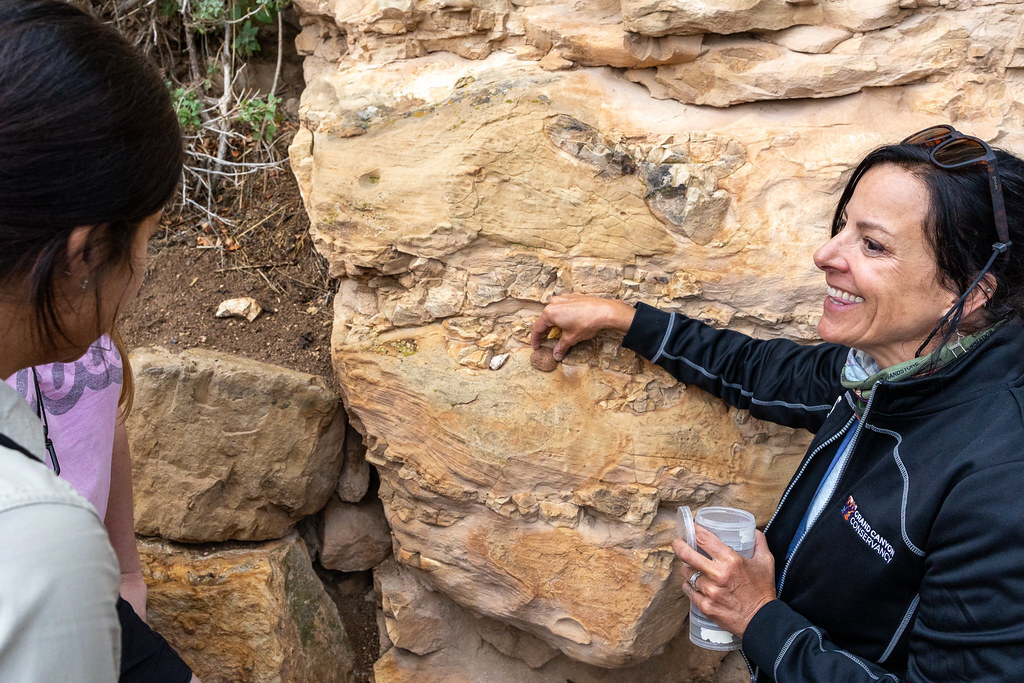
Through publications, immersive learning experiences, and public programs, Grand Canyon Conservancy helps share these stories and support the next generation of canyon stewards.
Women’s History Month is just one moment to reflect on these contributions. Throughout the year, new research, books, and educational programs continue to highlight the people working to understand and protect this remarkable landscape.
FAQ: Women in Grand Canyon History
How can I learn more about women in canyon history?
Books, educational resources, and Field Institute programs offer opportunities to explore the stories of women who shaped the canyon’s scientific, cultural, and preservation history.
How does purchasing books support preservation?
Purchases made through Grand Canyon Conservancy help fund educational programs, research, and preservation efforts that protect Grand Canyon for future generations.
Originally Published: 03-17-2026
Last Updated: 04-30-2026
Stories of Women Who Shaped Grand Canyon